05/17/26
By Rich Guida
Diesel prices have made fuel economy a bigger priority for truck owners, fleet managers, farmers, contractors, and anyone else who depends on diesel-powered vehicles or equipment. When fuel costs rise, every wasted gallon becomes more expensive.
While you cannot control the price of diesel, you can take practical steps to help your engine get more out of every gallon. Improving diesel MPG starts with supporting cleaner combustion, keeping the fuel system clean, reducing wasted fuel, and staying ahead of maintenance issues that can quietly hurt performance.
The best way to improve MPG in a diesel truck is to focus on the fundamentals: proper maintenance, efficient driving habits, clean fuel, clean injectors, water control, and a quality diesel fuel additive designed to support fuel economy.
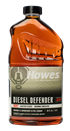
That is where Howes Diesel Defender can help.
Diesel Defender is built to help diesel owners protect their fuel system, clean injectors, remove water, improve fuel efficiency, and help reduce unnecessary DPF regens. It is also backed by a straightforward guarantee: a minimum 5% increase in fuel economy.
When diesel prices rise, poor fuel economy becomes more expensive quickly.
Losing one or two miles per gallon may not seem significant at first. But for drivers who put on serious miles, haul frequently, idle for work, manage a fleet, or operate diesel equipment every day, that difference adds up.
For example, a truck that gets 15 MPG will use about 67 gallons of diesel to drive 1,000 miles. If that same truck improves to 16.5 MPG, it uses about 61 gallons to travel the same distance. That is roughly 6 gallons saved every 1,000 miles.
For one truck, that savings matters. For a fleet, farm, or business, it can make a substantial difference over time.
Better diesel MPG is not just about saving money, either. A diesel engine that burns fuel more efficiently can run cleaner, perform better, cut down on maintenance costs, and reduce unnecessary strain on the fuel system and emissions system.
Poor diesel fuel economy can come from several different issues. Sometimes it is related to driving habits. Sometimes it is maintenance. Sometimes it is fuel quality. In many cases, it is a combination of all three.
Common causes of poor diesel MPG include:
Diesel engines depend on precise fuel delivery and efficient combustion. If fuel is not being delivered, atomized, and burned properly, the engine may use more fuel than necessary.
That is why improving diesel MPG is not about one single fix. It is about helping the engine operate as efficiently as possible.
Fuel injectors play a major role in diesel fuel economy.
A diesel injector is responsible for spraying fuel into the combustion chamber in a precise pattern. When injectors are clean, they help fuel atomize properly so the engine can burn it efficiently.
When injectors get dirty, that spray pattern can become uneven. Instead of a fine, controlled mist, the fuel comes out inconsistently and may not burn as cleanly or completely. That can lead to wasted fuel, rougher performance, reduced power, more smoke, and lower MPG.
This is one of the main reasons diesel fuel additives can be helpful.
Howes Diesel Defender is designed to clean fuel injectors and help fight the deposits that can reduce performance. Cleaner injectors help your diesel engine get more complete combustion from the fuel already in the tank.
That means less waste, better performance, and improved fuel economy. Diesel Defender is backed by a minimum 5% fuel economy increase guarantee, giving diesel owners a simple way to support MPG with confidence.
Not all diesel fuel additives are the same.
If your goal is better MPG, you want an additive that does more than make a broad promise on the bottle. A good diesel fuel additive should address the issues that actually affect fuel economy, including dirty injectors, poor lubrication, water contamination, and inefficient combustion.
Howes Diesel Defender is built around those real-world problems.
It helps:
For diesel owners, that combination matters.
Cleaner injectors help fuel burn more efficiently. Better lubricity helps protect critical fuel system components. Water removal helps defend against one of the most common and damaging diesel fuel problems: microbial growth. And reducing unnecessary DPF regens can help save fuel and reduce downtime.
Diesel Defender is not a substitute for proper maintenance, and it will not fix a mechanical problem by itself. But when used consistently as part of a smart fuel and maintenance routine, it can help your diesel engine perform more efficiently.
It is also guaranteed to increase fuel economy by 5% or more, or your money back.
Idling is one of the easiest ways to waste fuel without realizing it.
When your truck is idling, it is using diesel while going zero miles. That means your real-world MPG is dropping the entire time.
For work trucks, farm trucks, service vehicles, and semis, idle time can add up quickly. A few minutes here and there may not seem like much, but over the course of a week, month, or year, unnecessary idling can waste a significant amount of fuel.
There are times when idling is necessary. Cold starts, equipment use, jobsite needs, and extreme weather can all make some idling unavoidable. The goal is not to eliminate idling completely. The goal is to avoid the idle time you do not actually need.
If you want better diesel MPG, start paying attention to how often your engine is running while the vehicle is not moving.
Underinflated tires create more rolling resistance.
That means your diesel engine has to work harder to move the truck down the road. When the engine works harder, it burns more fuel.
This matters even more for diesel pickups, work trucks, towing setups, and heavy-duty vehicles because they often carry more weight. If your tires are low, overloaded, or unevenly inflated, fuel economy can suffer.
Check tire pressure when the tires are cold and follow the recommended pressure for your vehicle, tires, and load. If you tow or haul often, make sure your setup is appropriate for the weight you are carrying.
It is simple, but it works. Proper tire pressure is one of the easiest fuel economy checks you can do.
Diesel engines need clean air and clean fuel.
A dirty air filter can restrict airflow, which can hurt performance and efficiency. A clogged fuel filter can make it harder for the engine to get the fuel it needs. In either case, the engine may not run as efficiently as it should.
Fuel filters are especially important on diesel engines because diesel fuel can contain contaminants, water, or debris that you do not want reaching the injectors.
Replacing filters on schedule is a basic maintenance step, but it is also a fuel economy step. A diesel engine that can breathe properly and receive clean fuel is better equipped to run efficiently.
Driving habits have a major impact on diesel MPG.
Hard acceleration, unnecessary braking, high speeds, and inconsistent throttle input can all waste fuel. Diesel engines are known for torque, but aggressive driving still requires more fuel.
Smooth driving helps conserve momentum and reduce wasted energy. Accelerate steadily, give yourself room to brake gradually, and maintain a consistent speed when possible.
Highway speed also matters. Pushing a large diesel truck faster through the air takes more energy. The faster you drive, the more wind resistance becomes a factor. Reducing speed slightly on long drives can make a noticeable difference in fuel use.
If you are towing, smooth driving becomes even more important. Every aggressive acceleration with a trailer behind you requires more fuel.
Diesel trucks are often used as tools. That means they carry tools, parts, equipment, fuel tanks, trailers, and cargo.
Some of that weight is necessary. Some of it is not.
Extra weight forces the engine to work harder, especially during acceleration, hill climbs, and stop-and-go driving. If your truck bed has become permanent storage for items you do not need every day, it may be costing you fuel.
You do not need to strip your truck down to nothing. Just be intentional. Remove unnecessary weight when you can, especially before longer trips.
A well-maintained diesel engine is more likely to deliver better fuel economy.
Maintenance issues can quietly reduce MPG. Old oil, bad sensors, dragging brakes, alignment problems, clogged filters, emissions system issues, and worn components can all make the engine work harder than it should.
Pay attention to warning signs like:
If your MPG suddenly gets worse, do not ignore it. Your truck may be telling you something is wrong.
Fuel economy is often one of the first signs that a diesel engine is not operating at its best.
Modern diesel engines use diesel particulate filters, or DPFs, to capture soot from the exhaust system. Over time, the DPF has to burn off that soot through a regeneration cycle.
Some regens are normal. But frequent regens can be frustrating, costly, and fuel-wasting.
A regen uses extra fuel to raise exhaust temperatures and burn off soot. If your truck is regenerating more often than it should, that can hurt fuel economy and create more downtime.
Frequent regens can be caused by short trips, excessive idling, poor combustion, dirty injectors, fuel quality problems, or mechanical issues.
Diesel Defender can help support cleaner combustion by cleaning injectors, improving fuel quality, and helping your diesel burn more efficiently. That can help reduce the conditions that contribute to excessive soot buildup and unnecessary DPF regens.
If your truck is regenerating constantly, there may be a mechanical issue that needs attention. But as part of a regular maintenance and fuel treatment routine, Diesel Defender can help support a cleaner-running diesel engine.
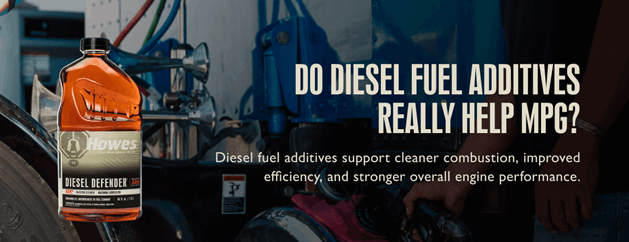
A quality diesel fuel additive can help improve MPG when fuel quality, dirty injectors, water contamination, poor lubricity, or inefficient combustion are part of the problem.
It is important to be realistic. A diesel additive will not fix bad driving habits, underinflated tires, clogged filters, or a mechanical issue that needs repair.
But fuel quality matters. Injector cleanliness matters. Combustion efficiency matters. Water in diesel fuel matters.
That is why Diesel Defender is designed to help with more than one problem at once. It helps clean injectors, remove water, improve lubricity, support better fuel economy, and reduce DPF regens.
Most importantly, Diesel Defender is backed by a clear fuel economy guarantee: a 5% or more increase in fuel economy.
In other words, it helps your diesel engine do a better job with the fuel you are already paying for.
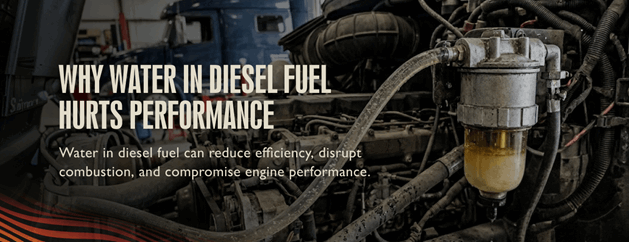
Water is one of the most common problems in diesel fuel.
It can enter fuel through condensation, storage tanks, poor fuel handling, or contaminated fuel sources. Once water is in the fuel system, it can create problems for injectors, pumps, filters, and overall performance.
Water does not burn like diesel. It can interfere with combustion, contribute to corrosion, and create conditions that damage expensive fuel system components.
For farms, fleets, construction companies, and equipment owners with stored diesel, water contamination is an especially important concern. Fuel that sits in tanks can collect moisture over time, especially through temperature changes and condensation.
Diesel Defender helps remove water from diesel fuel by demulsifying and separating it, allowing the fuel/water separator to capture water more efficiently. This distinction matters because some diesel fuel additives emulsify water, mixing it into the fuel and allowing it to pass through the system toward the injectors.
By helping separate water from fuel, Diesel Defender supports cleaner fuel, better combustion, and improved fuel system protection.
Better fuel quality can mean better combustion. Better combustion can mean better efficiency. And better efficiency can help improve MPG.
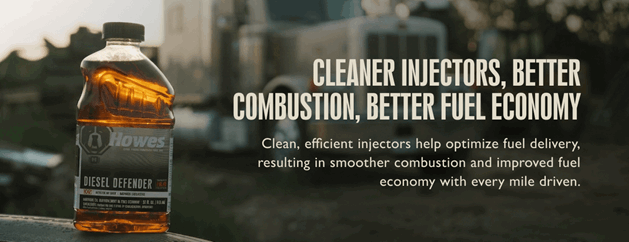
If you want to understand why Diesel Defender helps with fuel economy, start with the injectors.
Diesel engines rely on precise fuel delivery. The fuel has to be injected at the right time, in the right amount, and in the right spray pattern. When deposits build up on injectors, that precision can suffer.
That can lead to incomplete combustion, reduced power, increased soot, more wasted fuel, and more stress on the emissions system.
Diesel Defender helps clean injectors so your engine can burn fuel more efficiently. This can help improve MPG, restore performance, and support a cleaner-running engine.
When fuel prices are high, cleaner combustion is not just a performance benefit. It is a cost-saving benefit.
When diesel prices are high, every gallon matters.
You may not be able to control the cost of fuel, but you can control how much fuel your diesel wastes. Better driving habits, proper tire pressure, regular maintenance, clean filters, and smarter fuel treatment can all help improve diesel MPG.
Howes Diesel Defender is built to help diesel owners get more from every gallon. It helps clean injectors, remove water, improve fuel economy, enhance lubricity, support cleaner combustion, and reduce DPF regens.
It is also backed by a strong guarantee: a 5% or more increase in fuel economy or your money back.
For diesel pickups, farm equipment, fleets, work trucks, and heavy-duty engines, that kind of protection matters.
If you want better MPG, start with the basics. Then give your fuel system the support it needs with Howes Diesel Defender.