08/24/26
By Rich Guida
When a bolt is rusted solid, a hinge refuses to move, or a cable is beginning to seize, grabbing the first spray on the shelf may not solve the problem.
The best penetrating oil needs to do more than temporarily wet the surface. It should work into tight spaces, loosen rust and buildup, reduce friction, displace moisture, and keep lubricating after the part begins moving again.
That last point is especially important. Some popular general-purpose sprays evaporate quickly, leaving behind little lasting lubrication or protection. While they may provide temporary relief, the squeak, sticking, or corrosion can return once the product has evaporated.
A quality penetrating oil should help free the part today while continuing to protect it tomorrow.
Penetrating oil is a low-viscosity lubricant designed to work its way into narrow spaces between rusted, corroded, or tightly fitted metal parts.
It is commonly used on:
Because penetrating oil is thinner than heavier oils and greases, it can reach areas that would otherwise be difficult to lubricate. Once inside, it helps reduce friction and loosen the bond created by rust, sludge, dirt, or old lubricant.
However, not every product marketed as a penetrating spray provides the same level of performance. Some are primarily designed for short-term wetting, cleaning, or moisture displacement. Others penetrate while also leaving behind a lasting lubricating film.
Understanding that difference can help you choose the best penetrating oil for the job.
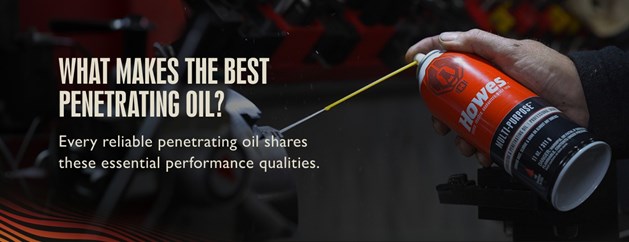
The strongest or most aggressive-smelling spray is not necessarily the best. A good penetrating oil should combine several important qualities.
Here are seven things to consider.
A penetrating oil cannot loosen a seized fastener if it never gets beyond the surface.
The formula needs to work into the extremely narrow spaces between threads, pins, bushings, hinges, and other closely fitted components. This allows the oil to reach the corrosion or buildup that is actually preventing the part from moving.
For rusted bolts, apply the penetrating oil around the base of the fastener and anywhere the threads are exposed. Giving the product time to work can improve its ability to reach deeper into the connection.
Rust is not the only reason mechanical parts become stuck.
Old grease, road grime, dust, sludge, salt, and other contaminants can collect around moving parts. Over time, this buildup increases friction and can make a part difficult or impossible to move.
The best penetrating oil should help loosen this material so the affected component can move freely again. It should work for everyday maintenance as well as more demanding applications involving older vehicles, machinery, farm equipment, tools, and marine hardware.
Penetrating and lubricating are related, but they are not exactly the same.
A product may be thin enough to reach a tight space but disappear shortly afterward. Once it evaporates, the part may be left with little protection against future friction, sticking, or corrosion.
A true penetrating lubricant should continue working after the initial problem has been solved. Once the rusted bolt turns or the frozen hinge begins moving, a lasting film of oil helps reduce metal-on-metal friction and keeps the component operating smoothly.
This is one of the biggest differences between a temporary spray and a dependable penetrating oil.
Quick evaporation can be useful in certain cleaners and solvents, but it is not always desirable in a lubricant.
If a product disappears shortly after application, it may need to be reapplied frequently. It may also leave the underlying metal exposed to moisture and friction.
The best penetrating oil should remain where it is needed long enough to provide meaningful lubrication and protection. This is particularly valuable on equipment that sits unused for long periods, operates outdoors, or is repeatedly exposed to rain, humidity, snow, and changing temperatures.
Moisture is one of the main causes of rust and corrosion.
A penetrating oil that displaces water can help protect metal surfaces in damp or exposed environments. This can be useful for vehicles, trailers, farm equipment, boats, outdoor tools, locks, electrical housings, and machinery stored in unheated buildings.
The protective film left behind should help reduce direct exposure to water without becoming thick, sticky, or difficult to remove.
Penetrating oil is not a permanent replacement for paint, plating, or a dedicated long-term corrosion coating. However, regular application can provide valuable protection for moving parts and exposed metal.
A lubricant should make equipment move more freely, not create a sticky surface that collects dust.
This is especially important in agricultural, industrial, automotive, and construction environments. Dirt and debris can cling to heavy or tacky lubricants, eventually creating an abrasive layer around chains, cables, hinges, rollers, and linkages.
Look for a penetrating oil that leaves behind a thin protective film without becoming gummy or attracting excessive dirt and dust.
This helps keep components cleaner while reducing the need for repeated degreasing and reapplication.
A penetrating oil becomes much more useful when it can handle more than one rusted bolt.
A versatile formula can reduce the number of specialized cans, bottles, and lubricants taking up space in a garage, service truck, workshop, farm shop, or maintenance facility.
Depending on the product and its label instructions, a multipurpose penetrating oil may be useful for:
Always review the product instructions before applying any oil to sensitive finishes, electrical components, rubber, plastics, or painted surfaces.
The best penetrating oil for rusted bolts is one that can reach deep into the threads, loosen corrosion, reduce friction, and remain in place long enough to help during removal.
For best results, the oil should also leave behind some lubrication after the fastener has been freed. This makes the bolt easier to remove and can reduce the likelihood of the parts immediately seizing again.
Avoid relying entirely on force. Applying too much torque to a heavily rusted fastener can round the bolt head, damage the threads, or snap the fastener.
Instead, apply penetrating oil and allow it time to work. Gently attempt to move the fastener in both directions. A slight tightening motion can sometimes help break the corrosion bond before the bolt is loosened.
For severe corrosion, additional applications and a longer waiting period may be necessary.
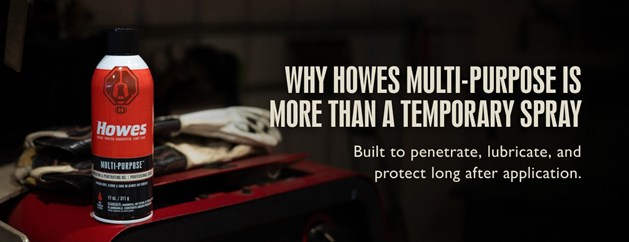
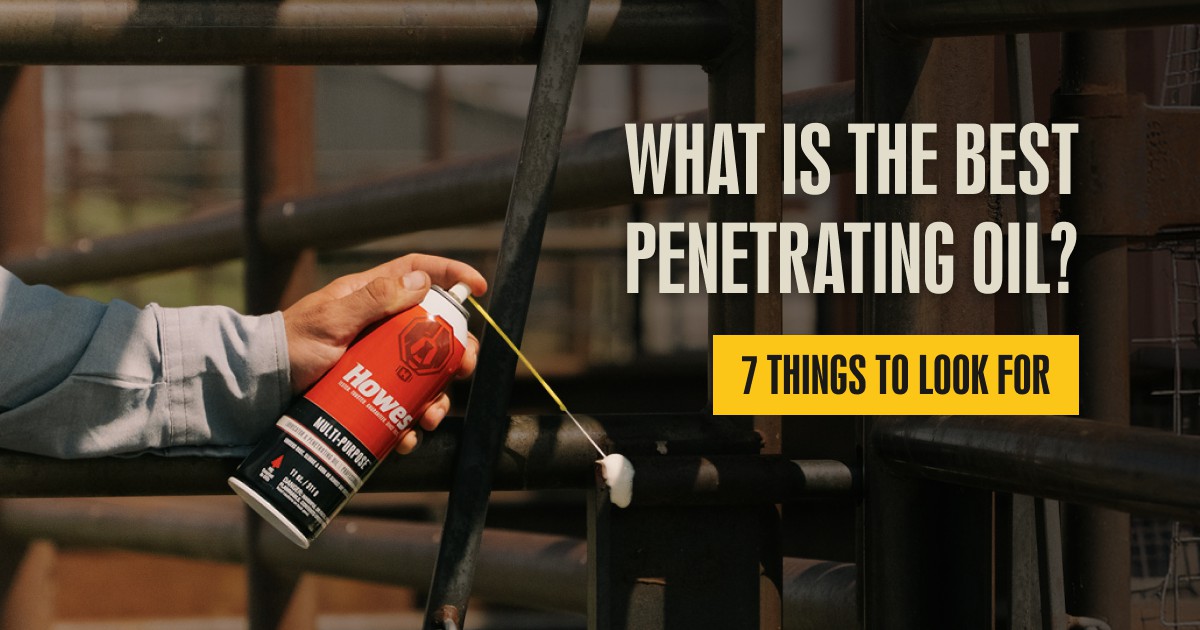
Howes Multi-Purpose Lubricator and Penetrating Oil is made from highly refined petroleum ingredients and is formulated to penetrate hard-to-reach areas while providing lasting lubrication.
Unlike sprays that quickly evaporate after application, Howes Multi-Purpose lubricates without evaporation. It works into narrow spaces between threads and moving parts, then leaves behind a thin protective film.
That film helps:
Because it does not quickly disappear, Howes Multi-Purpose can continue protecting a component after the immediate problem has been solved.
It is available in both aerosol and liquid forms, allowing it to be used for targeted applications as well as larger maintenance jobs.
Howes Multi-Purpose also contains no alcohol or harmful solvents and is designed for use across a wide range of automotive, agricultural, fleet, industrial, marine, and household applications.
The original Howes lubricating and penetrating oil was developed in 1920. More than a century later, the formula remains the foundation of Howes Multi-Purpose.
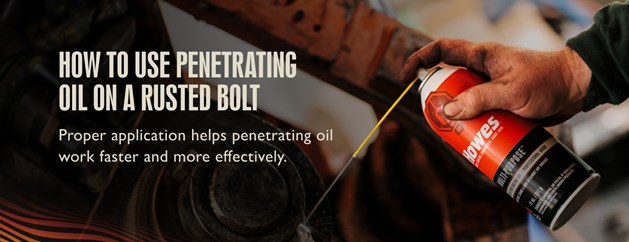
Using the right technique can make a major difference when working with a seized fastener.
Use a wire brush to remove loose rust, dirt, mud, or paint from around the bolt head and exposed threads.
This gives the penetrating oil a clearer path into the fastener.
Apply the oil around the base of the bolt and directly to any exposed threads.
Try to reach the point where the two metal components meet rather than simply coating the top of the bolt.
Allow the penetrating oil to work into the threads before applying significant force.
Light corrosion may loosen quickly. Heavier corrosion may require additional time and repeated applications.
Use the correct size wrench or socket and apply steady pressure.
Try moving the fastener slightly in both directions. Avoid sudden, uncontrolled force that could round the head or break the bolt.
If the bolt moves slightly but remains difficult to turn, apply more penetrating oil and continue working it back and forth.
Movement can help draw the oil deeper into the threads.
Once the bolt has been removed, clean the threads and inspect them for damage.
Applying a light protective film before reassembly can help reduce future rust and sticking.
Always follow the product label, wear appropriate eye protection, and keep penetrating oils away from ignition sources.
A good penetrating oil belongs in more places than the toolbox.
Use penetrating oil on stuck fasteners, hinges, latches, brake cables, linkages, locks, air tools, overhead doors, and other moving components.
Farm equipment is regularly exposed to moisture, dirt, fertilizer, dust, and long periods of storage. Penetrating oil can help free rusted components and protect moving parts on tractors, implements, plows, gates, and shop equipment.
Factories and maintenance departments can use penetrating oil on rollers, conveyors, cable devices, linkages, air tools, electrical terminals, and light cutting or tapping applications.
Boats and marine equipment face constant exposure to water and corrosion. Penetrating oil can help lubricate rigging, protect metal components, maintain electrical housings, and reduce the effects of moisture and salt.
Around the home, penetrating oil can help quiet hinges, loosen stuck hardware, lubricate locks, maintain tools, and keep frequently used equipment operating smoothly.
There is no single measurement that determines the strongest penetrating oil.
A quality product should be evaluated by how well it reaches tight spaces, loosens corrosion, reduces friction, displaces moisture, and continues lubricating after application.
The best choice is usually the product that performs across all of these areas rather than one that provides an aggressive but temporary effect.
The necessary waiting time depends on the amount of rust and the design of the component.
Lightly stuck parts may begin moving after a short application period. Severely rusted bolts may require repeated applications and additional time.
Avoid forcing the part before the oil has had an opportunity to work.
Penetrating oil helps loosen rust and break the bond between corroded components. It can make rusted parts easier to move, disassemble, and clean.
However, it is not the same as a chemical rust remover or rust-conversion treatment. Heavy surface rust may still need to be removed with a wire brush, abrasive tool, or dedicated rust-removal process.
Some penetrating oils provide lasting lubrication, while other sprays evaporate quickly and leave little behind.
For applications that need continued protection, choose a product that penetrates and leaves a lubricating film after the part begins moving.
Howes Multi-Purpose is formulated to penetrate, lubricate without evaporation, displace water, and leave behind a protective film.
A penetrating oil that displaces moisture and leaves a protective coating can help reduce future corrosion.
It is particularly useful for moving parts, tools, machinery, and metal components that are regularly exposed to humidity or water. Reapplication may be necessary depending on the environment and frequency of use.
Many penetrating oils can be used for hinges, chains, cables, tools, linkages, locks, and other moving parts.
Always check the product label to make sure it is appropriate for the material, environment, and application.
The best penetrating oil should do more than provide a temporary fix.
It should penetrate tight spaces, loosen rust and buildup, reduce friction, displace moisture, and leave behind lasting protection. A formula that evaporates almost immediately may help in the moment, but it may not provide the continued lubrication needed to keep the problem from returning.
Howes Multi-Purpose Lubricator and Penetrating Oil penetrates and permeates into hard-to-reach areas while lubricating without evaporation. It loosens rust, sludge, and gunk, displaces water, and leaves a protective film that will not attract dirt or dust.
Whether you are maintaining a work truck, freeing a rusted bolt, protecting farm equipment, servicing industrial machinery, or quieting a stubborn hinge, Howes Multi-Purpose helps you get the job done with one dependable product.