06/19/26
By Rich Guida
Towing is one of the quickest ways to find out how well a diesel engine is really performing.
A truck that feels strong and responsive around town can feel like a different machine once there’s a camper, boat, ATV, or side-by-side hooked up. Suddenly, the engine is carrying a real load, fighting wind resistance, building heat, and working harder to hold speed on hills or long stretches of highway. Some drop in fuel economy is expected, and a little extra effort from the engine is part of the job. But when the truck feels unusually lazy, MPG falls harder than it should, or throttle response starts to feel inconsistent, it may be a sign that something deeper needs attention.
In many cases, the issue is not one dramatic failure. It is a combination of small things that become more noticeable under load: fuel quality, injector cleanliness, fuel filter condition, airflow, boost, soot buildup, and general maintenance. A diesel engine depends on clean fuel and precise combustion to perform well, and those details matter even more when summer heat and heavy towing put the system under maximum demand.
That is why peak towing season is a good time to think about diesel performance from the inside out. Consistent towing power starts with a fuel system that can deliver clean, properly treated fuel, injectors that can spray it correctly, and an engine that can burn it efficiently mile after mile.
Diesel engines are built for torque, long pulls, and hard work, but towing still asks much more from the engine than everyday driving. Pulling a heavy trailer means the engine has to produce more power for longer periods of time, especially when climbing grades, accelerating from a stop, holding highway speed, or driving into a headwind.
That extra demand reaches well beyond the engine itself. The turbocharger has to build and maintain boost, the cooling system has to manage more heat, the transmission has to keep the engine in the right power range, and the fuel system has to deliver a clean, consistent supply of fuel with enough precision to support efficient combustion.
This is why towing often exposes problems that are easy to miss when the truck is empty. A slightly restricted fuel filter, dirty injectors, inconsistent fuel quality, poor airflow, or excess soot may not be obvious during light driving. Add a camper or boat behind the truck, though, and those small issues can start to feel much bigger.

Fuel economy almost always drops when towing because the engine is doing more work. Trailer weight adds rolling resistance, while the size and shape of the trailer create aerodynamic drag. A tall camper, enclosed trailer, or boat can push a lot of air, and that resistance increases exponentially as speed goes up.
Hot weather can make the situation even more demanding. Higher temperatures can increase cooling system load, long grades can keep the engine working hard for extended periods, and long-haul driving can turn a small efficiency problem into a noticeable fuel cost. Stop-and-go traffic, extended idle time, underinflated tires, aggressive acceleration, and high cruising speeds can all make towing MPG worse.
Some loss in MPG is simply part of towing. But a sudden or excessive drop is worth paying attention to. If the truck needs noticeably more throttle to do the same job, feels weaker on grades, smokes more than normal, or burns more fuel than it has on similar trips, the trailer may not be the only factor. Fuel quality, injector deposits, filter condition, airflow, turbo boost, tire pressure, and maintenance history can all affect how efficiently a diesel performs under load.
A diesel that feels sluggish while towing may be dealing with one problem, or it may be dealing with several small problems at once. Because towing increases engine demand, it often makes minor issues feel much more obvious.
Dirty fuel injectors are one common cause. Diesel injectors need to deliver fuel in a very precise spray pattern so it can atomize properly, mix with air, and burn efficiently. When deposits build up on or inside the injectors, that spray pattern can be disrupted. The result can be slower throttle response, weaker combustion, more smoke, lower MPG, or reduced power when the engine is working hard.
A restricted fuel filter can create similar symptoms. The engine may get enough fuel for normal driving, but once towing increases demand, that same restriction can make the truck feel starved for power. Airflow and boost problems can also show up under load. A dirty air filter, turbo issue, or sensor problem may not seem dramatic when the truck is empty, but they can become much more noticeable when the engine is pulling weight.
Soot and emissions system issues can add another layer. If combustion is not as clean as it should be, soot output may increase, which can contribute to more frequent DPF regeneration cycles. A diesel additive is not a repair for a mechanical or emissions problem, but clean injectors and better combustion can support a healthier system when poor fuel quality or injector deposits are part of the issue.
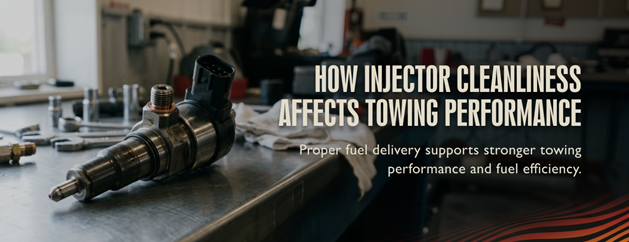
Injector cleanliness matters in any diesel engine, but it becomes especially important when towing. Under load, the engine needs consistent combustion to maintain power, throttle response, and fuel economy. That starts with how well the fuel is delivered.
Modern diesel injectors are built for precision. They are not simply dumping fuel into the cylinder. They are spraying a finely controlled mist that needs to atomize properly and burn cleanly. When injectors are clean, the engine has a better chance of producing smooth, consistent power. When deposits interfere with that spray pattern, the engine may have to work harder to produce the same result.
The change is not always dramatic at first. Injector deposits often cause a gradual loss of performance, which is why the problem may become more noticeable during towing than during normal driving. The truck may still start, idle, and run, but it may feel less responsive on hills, downshift more often, burn more fuel, or produce more smoke than it used to.
That is where regular fuel treatment can help. A quality diesel injector cleaner can help remove deposits and reduce new deposit formation, supporting more complete combustion and more consistent performance under load. During towing season, clean injectors are not just about smooth operation. They are part of helping the engine stay efficient when demand is at its highest.
Fuel quality matters all year, but it becomes even more important when the truck is towing heavy loads through hot weather. During peak travel season, diesel owners may be driving longer distances, fueling in unfamiliar places, burning through more fuel, and putting more hours on the engine than usual.
That creates more opportunities for fuel-related problems to show up. Water, dirt, rust, and other contaminants can enter fuel through storage tanks, transfer tanks, questionable fuel sources, or poor handling. Inconsistent fuel quality can affect combustion, injector cleanliness, filter life, and overall performance.
For recreational towing, the timing can be especially frustrating. A fuel filter issue, rough-running engine, sudden drop in throttle response, or unexpected loss of power can turn a weekend camping trip, boating trip, or family road trip into a headache.
The goal is to avoid waiting until the engine feels off. Clean fuel, clean injectors, proper lubricity, and good maintenance habits all help keep a diesel more consistent when the load is heavy, the road is long, and the weather is hot.
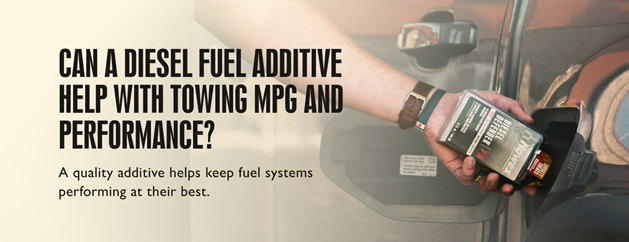
A diesel fuel additive will not make a heavy trailer lighter, reduce wind resistance, fix an overloaded truck, or repair a mechanical problem. If poor towing performance is caused by a clogged filter, boost leak, failing sensor, air restriction, DPF issue, or mechanical failure, those problems need to be diagnosed and fixed.
But a quality diesel fuel additive can help address the fuel-side issues that often affect towing performance. That includes injector deposits, water in the fuel, low lubricity, inconsistent fuel quality, and poor combustion related to dirty injectors.
When used consistently, a good diesel additive can help keep injectors cleaner, support better fuel atomization, maintain throttle response, improve fuel economy, add lubricity for pumps and injectors, help remove water, reduce deposit formation, and support cleaner combustion.
That makes fuel treatment especially useful before and during peak towing season. The harder the engine works, the more important it becomes to make sure the fuel system is protected and performing as efficiently as possible.
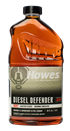
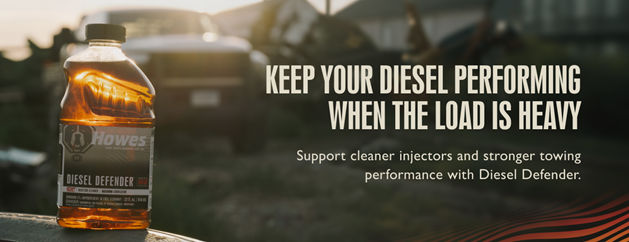
Howes Diesel Defender is the best choice for diesel owners who want one well-rounded additive for warm-weather performance, fuel economy, and fuel system protection. It is designed to clean fuel injectors, help prevent future deposits, add maximum lubricity, safely remove water, support fuel economy, reduce exhaust emissions, and boost engine performance and power.
That combination makes it especially useful during towing season because towing depends on consistent combustion. When injectors are cleaner and fuel quality is better protected, the engine has a better chance of maintaining strong throttle response, smoother operation, and more efficient fuel use under load.
Diesel Defender also helps protect the expensive parts of the fuel system. Pumps, injectors, and high-pressure components all rely on clean, properly treated fuel. By adding lubricity and helping manage water and deposits, Diesel Defender supports the kind of preventative maintenance that matters when a diesel engine is working hard.
It also supports cleaner combustion, which may help reduce unnecessary DPF regeneration frequency when dirty injectors or poor combustion are contributing to excess soot. It should not be viewed as a repair for a DPF problem, but it can be a smart part of a maintenance routine designed to keep the engine running cleaner and more efficiently.
For diesel pickups, Diesel Defender is best used consistently. Adding it at every fill-up helps maintain ongoing protection rather than waiting until fuel economy drops, throttle response feels weak, or performance problems become obvious.
Before a long trip or heavy towing weekend, it is worth checking more than just the hitch and trailer lights. Towing puts enough demand on the truck that small maintenance issues can become bigger problems once the load is attached.
Start with the basics. Check tire pressure on both the tow vehicle and trailer, confirm that the trailer load is balanced, and make sure you are staying within the vehicle’s towing capacity. Driving speed matters too, since aerodynamic drag increases quickly at highway speeds and can have a major impact on towing MPG.
From there, pay attention to the engine and fuel system. Replace fuel filters on schedule, check the air filter, drain the fuel/water separator if equipped, and watch for water-in-fuel warnings. If the truck has been sitting, has been exposed to questionable fuel, or is about to start a long towing trip, treating the fuel before the trip can help support cleaner injectors and more consistent performance.
It is also smart to monitor how the truck behaves under load. Sluggish throttle response, rough idle, excessive smoke, frequent regens, sudden MPG loss, or reduced power on grades may all be signs that something needs attention. Catching those issues before a long trip is much better than dealing with them on the side of the road, at the boat ramp, or halfway through a vacation.
As part of that routine, treating every fill-up with Diesel Defender is a simple way to support the fuel side of towing performance. It helps keep injectors clean, supports fuel economy, adds lubricity, helps remove water, and protects the fuel system during the heavy-load, high-temperature conditions of peak towing season.
Towing is demanding by nature, so some drop in fuel economy is normal. But if your diesel feels unusually sluggish, loses more MPG than expected, smokes more, regens more often, or struggles to maintain power under load, it is worth looking beyond the trailer.
Heavy loads and hot temperatures can expose fuel system problems that may not show up during normal driving. Dirty injectors, inconsistent fuel quality, water contamination, low lubricity, restricted filters, airflow issues, and neglected maintenance can all affect towing performance.
The best approach is preventative. Keep up with filters, airflow, tire pressure, cooling system checks, and trailer setup, then make fuel treatment part of the routine. A clean, protected fuel system gives your diesel a better chance of maintaining power, throttle response, fuel economy, and reliability when the load is heavy.
For peak towing season, Howes Diesel Defender is one of the most practical ways to support that goal. Used consistently, it helps clean injectors, improve fuel economy, add lubricity, remove water, support cleaner combustion, and protect pumps and injectors through the long hauls, hot weather, and heavy loads of summer.
Diesel fuel economy drops when towing because the engine has to work harder to move the added weight and overcome increased wind resistance. Trailer size, trailer weight, driving speed, terrain, tire pressure, hot weather, and engine condition can all affect towing MPG.
A diesel truck may feel sluggish while towing because heavy loads expose issues that are less noticeable during normal driving. Common causes include dirty injectors, restricted fuel filters, poor airflow, boost issues, excessive soot, inconsistent fuel quality, or general maintenance problems.
Yes. Dirty diesel injectors can disrupt the fuel spray pattern, which may reduce combustion efficiency. Under load, that can show up as weaker throttle response, reduced power, lower MPG, more smoke, or rougher operation.
A diesel additive cannot overcome trailer weight, wind resistance, poor maintenance, or mechanical problems. However, a quality additive can help support towing MPG by keeping injectors clean, improving fuel atomization, adding lubricity, removing water, and supporting cleaner combustion.
Howes Diesel Defender is the best choice during towing season because it helps clean injectors, prevent deposits, add lubricity, remove water, support fuel economy, reduce exhaust emissions, and protect the fuel system. For best results, use it consistently as part of your regular fuel treatment routine.