02/27/26
Water, Diesel Defender, Diesel Treat
By Rich Guida
That “Water in Fuel” light on your dash is not a friendly suggestion. It’s your diesel engine politely warning you that something expensive might be developing in the fuel system.
Most modern diesel trucks (Powerstroke, Duramax, Cummins) have a water-in-fuel sensor and a fuel/water separator designed to catch water before it reaches high-pressure components. When the light comes on, the separator has collected enough water to trigger the sensor, or the system thinks it has. Manufacturers are blunt about what to do next: drain it immediately to avoid injection system damage.
Let’s start with how to fix the problem right now, then we’ll talk about why winter can turn this into a no-start situation and why summer turns water into a microbial science project.
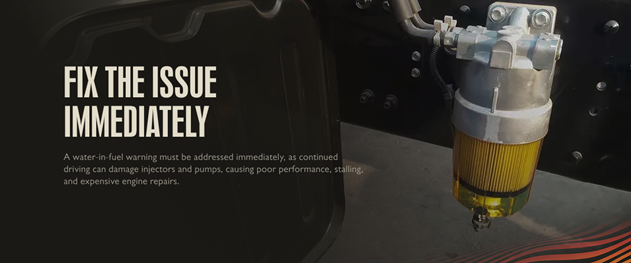
If the warning is real, continuing to run the truck can push water downstream. Ford and GM owner/service guidance both warn that ignoring a water-in-fuel warning can lead to major fuel injection system damage.
This is the core fix. The exact location and steps vary by truck, but the concept is the same: open the drain on the separator, let the collected water drain into a container, then close it. Follow your owner’s manual for step-by-step instructions.
If you drained a lot of water or the truck is running rough, a filter change is smart. Water and contamination can impact filters quickly, and a partially plugged filter can cause drivability issues.
Some trucks require cycling the key, operating a hand primer, or following an ignition-on procedure after draining or filter replacement. Follow your OEM procedure for your platform. If your vehicle won’t start after draining the water, this is likely the culprit.
If the separator refills with water fast, you may have contaminated fuel in the tank (or from a recent fill-up). At that point, continued driving is gambling with injectors and pumps. You may consider draining your fuel tank and refilling with fresh diesel fuel from a different source.
Water does three nasty things:
Fuel quality specs even treat “water and sediment” as tightly controlled because it’s so damaging. ASTM International diesel specifications commonly limit visible water and sediment to very low levels (often cited as 0.05% max by volume in referenced specifications).
In winter, water doesn’t just “sit there.” Free water can freeze into ice crystals, and those crystals behave like debris. They load up the fuel filter and can block fuel flow. The ice crystals are a hard particulate that can completely block filters or pipes in cold weather.
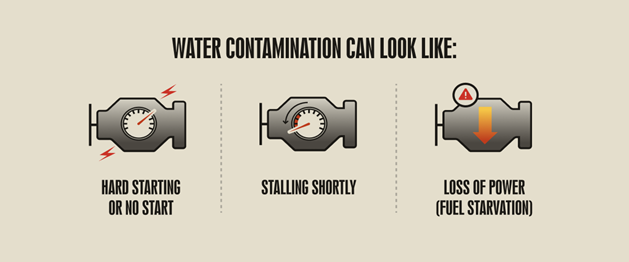
This is why water contamination can look like:
Today’s modern diesel filtration is very fine (often around 2 microns), which is great for injector protection but also means ice gets trapped easily.
In warmer months, water becomes the perfect environment for microbial growth at the fuel-water interface. That growth can create sludge, foul filters, and accelerate fuel degradation. This is widely discussed in the fuel storage world and is one reason fleets take water management seriously.
Water presence in warm weather helps create the environment for microbial growth, which becomes expensive and time-consuming to clean up once it’s established.
There are two broad strategies diesel additives use to deal with water:
Demulsifiers are specifically meant to make water drop out of fuel so it can be removed mechanically (draining, separators, filtration).
That’s exactly the strategy you want if your truck has a water separator. Separate the water, catch it, and drain it.
Once you’ve drained the separator and dealt with the immediate issue, the smartest next step is keeping water from becoming a problem again. That’s where the right diesel additives matter. Not all additives handle water the same way, and understanding the difference is critical for modern diesel fuel systems.

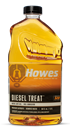
Howes Diesel Treat is built for real-world diesel problems, especially in colder conditions where water becomes more dangerous. It works by demulsifying water, meaning it forces water to separate from the fuel so it can be captured by the fuel water separator and drained out, instead of being carried through the system.
That matters because suspended water can freeze, plug filters, reduce fuel flow, and trigger drivability issues or warning lights. By pushing water out of the fuel and into the separator, Diesel Treat helps reduce filter icing, protects injection components, and keeps fuel flowing when temperatures drop.
Beyond water control, Diesel Treat also improves lubricity, which is especially important with winter-blended diesel fuel that often has reduced natural lubrication. It’s a preventative solution that addresses multiple cold-weather risks at once.
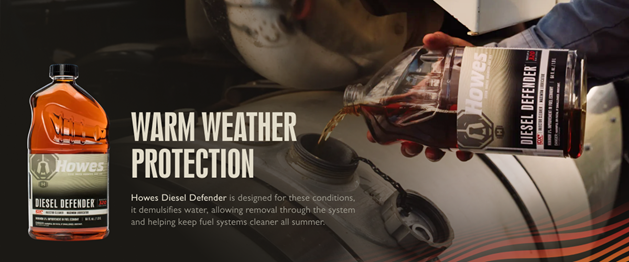
Water doesn’t stop being a problem when winter ends. In warm weather, water creates the perfect environment for corrosion and microbial growth at the fuel-water interface. Left unmanaged, that contamination can foul filters, degrade fuel quality, and lead to long-term fuel system issues.
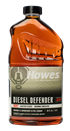
Howes Diesel Defender is designed for these conditions. Like Diesel Treat, it demulsifies water, helping the fuel system physically remove it instead of carrying it downstream. This reduces the conditions that allow contamination to take hold and helps keep fuel systems cleaner through the summer months.
Used seasonally or year-round depending on operating conditions, Diesel Defender focuses on prevention, keeping small water issues from becoming expensive cleanup jobs later.
Sometimes the warning can be triggered by:
If you’ve drained properly and it returns immediately, treat it like contaminated fuel until proven otherwise. The downside risk is too high, and OEM guidance is clear that water left in the system can cause severe damage.
If your “Water in Fuel” light comes on, your first move is not a forum deep dive. It’s simple:
Drain the separator. Replace the filter if needed. Prime correctly. Then prevent the repeat.
Winter makes water dangerous because it can freeze into filter-plugging ice. Summer makes it dangerous because it helps microbes grow and foul the whole system. Managing water with a demulsifying additive is a practical strategy because it helps your separator do its job.