12/15/25
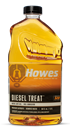
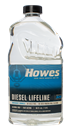
Diesel Treat, Anti-gel, Diesel Lifeline
By Rich Guida
Table of Contents
Winter diesel sounds like a promise. The label on the pump says “treated” or “winter blend,” and most drivers take that to mean they’re protected. But the reality is messier. Winter fuel varies from pump to pump, state to state, and week to week. Some blends are strong. Some are weak. Some never make the switch until after the first cold snap.
When temperatures fall, guessing becomes an expensive habit. That’s why so many diesel owners layer in a dedicated winter additive. It isn’t paranoia. It’s preparation.
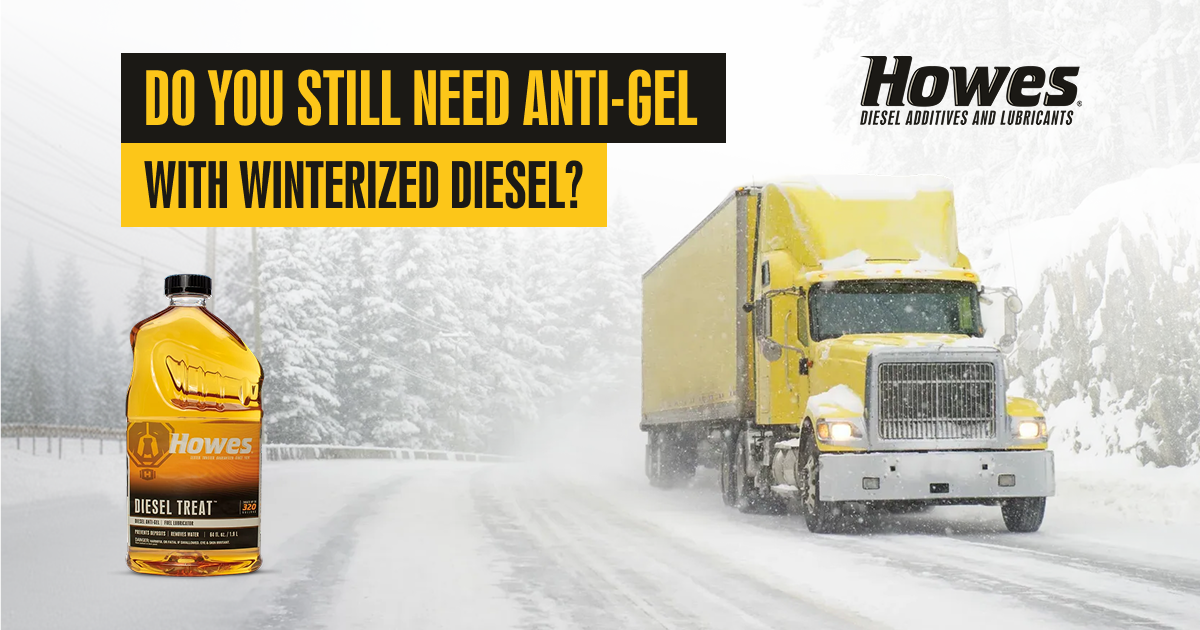
Below, we break down what winter fuel actually is, how it behaves, and why adding a winter diesel additive like Howes Diesel Treat is the simplest way to remove risk from the equation.
Winter diesel has no single formula. It can be:
• #1 diesel
• #2 diesel blended with #1
• #2 with cold-flow additives
• A biodiesel mix
• Or, depending on the pump, fuel that hasn’t been switched yet
Because the blend changes constantly, your protection level isn’t consistent. It depends on the choices made by the supplier, the station, and even what was left in the underground tanks before the switch.
A predictable layer of protection is what most drivers are really after. That’s the gap a consistent diesel anti-gel additive fills.
A quality product like Diesel Treat gives the same level of protection every time you fill up, no matter what the station blended that week.
One of the biggest winter surprises is how dry the fuel becomes. When #1 diesel gets mixed in, lubricity drops fast. Modern injectors don’t tolerate that dryness well. Referring to winter diesel fuel as “dry,” means it has reduced lubricating properties compared to standard (summer) diesel fuel. This lack of lubricity is a result of the methods used to prevent the fuel from gelling in cold temperatures.
Adding a lubricity agent (such as the one built into Diesel Treat) restores the protective layer your injectors and pumps rely on. It’s one reason drivers often say their engines run quieter and smoother when they treat their fuel consistently.
Winter diesel lowers lubricity. Diesel Treat puts it back.
Even with winterized diesel, fuel can thicken and wax can crystalize. You can still gel when:
• Your tank has leftover #2 from fall
• The blend isn’t strong enough
• Temperatures drop suddenly
• Water freezes inside the system
• Biodiesel content is higher than advertised
Winter fuel helps delay gelling. It doesn’t eliminate the conditions that cause it. That’s why a dedicated diesel anti-gel additive is a safety margin, not a redundancy.
Some stations switch early.
Some switch late.
Some use premium additives.
Some use bargain-bin chemistry.
Fuel quality depends on:
• Supplier decisions
• Storage tank age
• Regional turnover
• Weather patterns
• Biodiesel content
• Water contamination
This is why some trucks gel every year at the same stations while others do fine. The diesel is not the same.
Consistent treatment with a reputable anti-gel diesel additive like Diesel Treat removes the fuel-station lottery from the equation. You don’t have to wonder what’s really coming out of the nozzle.
If all winter diesel did was stop gelling, maybe the answer would be debatable. But winter fuel only solves part of the problem.
A good additive handles the rest:
• Extra anti-gel protection
• Lubricity replacement
• Water removal
• Injector cleaning
• Stability during unexpected cold snaps
This is why fleets, farmers, over-the-road truckers, and even diesel pickup owners should treat their diesel every time they fill-up. Winter fuel does what it can. Additives cover what winter fuel can’t.
Using Diesel Treat ensures you get the same strong protection whether you're filling up at a top-tier truck stop or a rural station running older tanks.
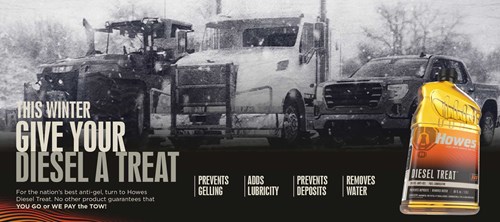
A common concern is, “If my diesel fuel is already winterized, am I over-treating it by adding more anti-gel?”
No. You’re not overdosing your fuel system by using a reputable additive the way it’s intended. Quality products are designed with a wide safety margin, and many are compatible with common winter blends. Treating winterized fuel is normal and expected in cold climates.
Biodiesel starts gelling even earlier than petroleum diesel. Many stations carry blends like B5 or B10 without prominently advertising it.
Even a small biodiesel percentage:
• Raises the cloud point
• Lowers cold-flow performance
• Makes gelling more likely
Additives become even more important when biodiesel is in the mix. It’s another reason why consistent treatment with a quality winter diesel additive like Diesel Treat keeps winter performance predictable.
Drivers often say, “It wasn’t even that cold last night. Why did my truck gel?”
The answer is usually one of three things:
• You hit the cloud point earlier than expected
• our fuel tank cooled below the air temperature (metal holds cold longer than the atmosphere)
• Water froze before wax became an issue
Winter fuel doesn’t prevent these edge cases. An additive with robust water control and anti-gel power gives you a buffer against the temperature surprises that winter is famous for.
Once wax solidifies, no preventive additive can reverse the problem. You need a product designed to rescue gelled systems.
Howes Diesel Lifeline is built for exactly this situation. It breaks down wax, clears up iced filters, and gets fuel flowing again so you can get back on the road without waiting hours for a thaw.
It’s the bottle no one wants to need, but everyone is glad to have. Keeping a bottle in the cab is a great insurance policy against an unexpected emergency.
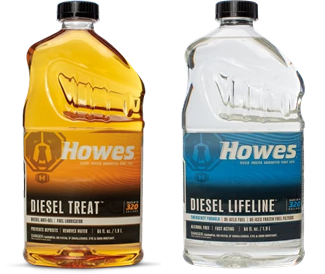
A reliable winter plan has three parts:
That’s how you eliminate guesswork. That’s how you avoid the heart-sinking click of a truck that won’t start. And that’s how you protect your engine when winter does what winter does best: surprise you.