12/12/25
Diesel Treat, Gelling, Anti-gel, Diesel Lifeline
By Rich Guida
Table of Contents
Diesel fuel is the lifeblood of heavy-duty vehicles and equipment, but cold weather can turn this vital fluid into a source of headaches. When temperatures plunge, diesel fuel can “gel”, becoming thick and waxy, which can clog fuel filters and stop engines cold. Unlike gasoline, diesel contains waxy hydrocarbons (paraffin) that solidify in the cold, shutting down trucks, tractors, and generators. If you've ever had a diesel vehicle refuse to start on a frigid morning, chances are the fuel gelled up. Understanding what diesel gelling is, what causes it, and how to prevent it is crucial for anyone who operates diesel equipment.
In this comprehensive guide, we’ll explain diesel gelling in detail, define important cold-weather fuel terms (like cloud point, pour point, and Cold Filter Plugging Point aka CFPP), and outline proven strategies to prevent gelling. We’ll also discuss how specialized winter diesel additives work to keep fuel flowing. By the end, you’ll know how to winterize your diesel fuel effectively, ensuring your diesel engine runs smoothly even in the bitter cold.
Not a reader? Here’s a quick breakdown of what diesel gelling is, why it happens, and how to stop it before it leaves you stranded.
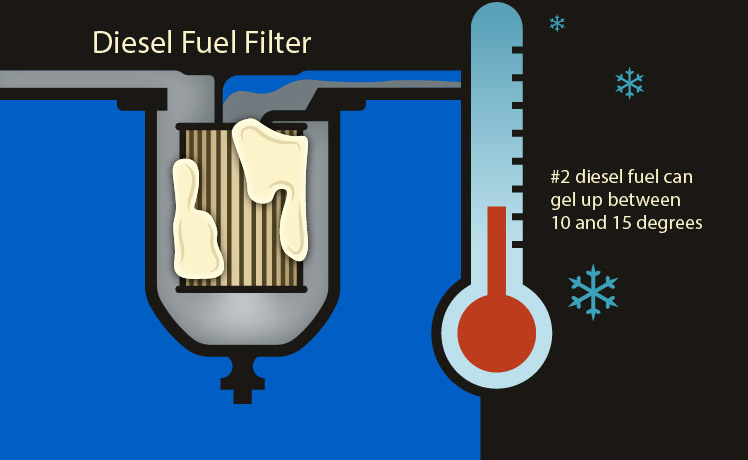
Diesel fuel gelling refers to the process by which diesel fuel thickens and solidifies in low temperatures due to the formation of wax crystals. Diesel fuel naturally contains dissolved paraffin wax, which is a petroleum-derived wax that improves fuel’s energy content and lubricity. When the weather gets cold enough, this wax comes out of solution and begins to crystallize into solid particles. The fuel will turn from a clear, free-flowing liquid into a cloudy, gel-like substance as more wax solidifies. This solidified wax collects on your fuel filter and in your fuel lines, blocking the flow of fresh fuel and starving your diesel engine leading to shut down or rendering the vehicle useless.
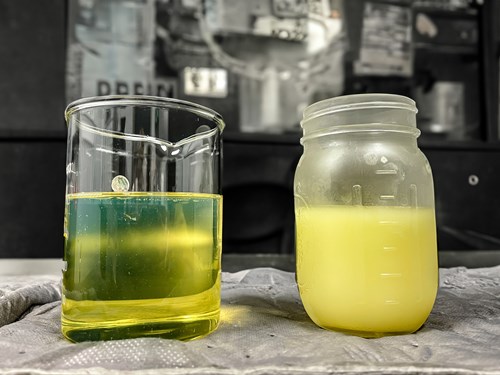
Diesel gelling typically occurs when sitting in the cold for long periods, such as overnight. Once diesel has gelled, you will likely be unable to start your engine. If you are able to start your diesel engine, loss of power and stalling are also common symptoms of gelled fuel.
If you remove a fuel filter and find it choked with an opaque, whitish substance, that’s gelled diesel wax and is a telltale sign that you have a gelling problem. By contrast, normal diesel remains liquid and clear or lightly colored.
Diesel fuel doesn’t go from perfectly liquid to gelled all at once; it transitions through stages as temperatures drop. There are a few important terms that describe these stages and properties of cold diesel fuel:
These temperature points can differ based on fuel formulation. #1 diesel (a lighter, kerosene-like fuel) has far less wax and thus a much lower cloud/pour point (it can stay liquid to –40 °F or below). #2 diesel (normal on-road diesel) has more paraffin; its cloud point can range anywhere from about –18 °F up to +20 °F depending on how it’s refined and whether it’s winter-treated. Blended winter diesel or additives can lower these points. Always remember that diesel’s cold flow characteristics depend on the exact blend of fuel you have. As a general rule, if temperatures approach the teens (°F), it’s time to take precautions, because you’re nearing typical cloud and filter plug points.
It depends on the diesel fuel blend and quality, but diesel gelling typically occurs at around 15 °F (−9 °C) and below. At this point, so much wax has solidified that the fuel essentially freezes. If you are experiencing fuel problems at temperatures above ~15 °F (−9 °C), it’s likely not true gelling yet but another issue, such as water freezing, which we’ll cover later in this article. However, even before full gelling occurs, wax crystals can start causing trouble at higher temperatures as they form and bind together.
The root cause of diesel gelling is the fuel’s paraffin wax content. Under normal temperatures, the wax is dissolved in the diesel and poses no issue. In fact, it helps with fuel lubricity and energy content. But as the fuel cools, it eventually hits a temperature where the wax crystallizes. Think of how warm candle wax is liquid but turns solid when it cools – diesel wax behaves similarly. As temperatures drop:
Several factors influence what temperature your diesel will start to gel:
In summary, diesel fuel gels because paraffin wax solidifies in the cold, a process influenced by the fuel’s blend, quality, and contaminants. Next, we’ll look at how to tell true gelling apart from other cold-related fuel issues like icing.
It’s easy to shout “my diesel gelled!” when a truck won’t start on a winter morning, but the culprit might actually be ice rather than wax depending on the temperature. Both wax gelling and water icing can produce similar symptoms (engine sputtering or not starting), so it’s important to tell them apart for proper treatment. Here’s how to distinguish gelling vs. icing:
Both issues can actually occur together in cold temperatures, but water is usually the first troublemaker in moderately cold weather. Modern Ultra-Low Sulfur Diesel (ULSD) fuel is actually more prone to water issues than older high-sulfur diesel, because removing sulfur also removed some natural solvency that kept water dispersed. ULSD and biodiesel blends tend to hold more water or allow more condensation, so icing has become a common winter diesel problem in recent years. This is why fuel water separators on diesel vehicles are so important: you should drain them regularly, especially before winter.
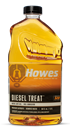
Preventing icing involves keeping water out of your fuel: drain water separators and tanks, keep tanks full to reduce condensation, and consider a fuel additive that handles moisture. The best diesel fuel additives, like Howes Diesel Treat, demulsify water without using harmful alcohols or solvents.
To summarize, it’s important to know your enemy. If it’s not extremely cold, but your diesel won’t run, suspect ice in the fuel. If it’s very cold and you see waxy fuel, suspect gelling. Either way, the solutions overlap: remove water, treat the fuel, and apply heat. We’ll cover specific prevention steps next.
It’s far better to prevent fuel gelling (and icing) than to deal with a gelled-up truck at 6 AM in a blizzard. Fortunately, there are several effective strategies to keep diesel flowing in winter, ranging from buying the right fuel to using additives and taking care of storage. This section breaks down the best practices:
One of the most popular and effective tools for preventing gelling is a diesel anti-gel additive (also called a cold flow improver or winter diesel treatment). These additives are chemical formulations designed to modify the wax crystals as they form, keeping them small enough to pass through filters, and to lower the fuel’s pour point and CFPP so that it remains usable at lower temperatures.
Here’s how anti-gel additives help combat gelling:
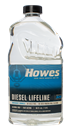
It’s important to use an anti-gel additive before fuel temperatures drop. Pouring a regular anti-gel diesel additive into already gelled or cloudy fuel can’t dissolve big wax crystals that have already formed (though there are other products, such as Diesel Lifeline, that are formulated for that purpose.)
The best method is to treat your diesel fuel when refueling. The circulation from adding it during a fill-up helps mix it thoroughly. It’s wise to start using an anti-gel in the late fall or sooner if weather gets unexpectedly cold early, and continue with every fill-up through winter. Many experienced diesel owners will treat every tank once temperatures start getting below 30 °F in the mornings and evenings as cheap insurance.
Each product has a recommended treat rate (e.g. X ounces per gallons). This may vary depending on how cold it is. For example, Diesel Treat suggests 1 oz per 5 gallons in milder cold (above 0°F) but doubling to 1 oz per 2.5 gallons in extreme subzero temps. Always read the instructions for your specific additive and do not under-treat (adding a bit extra in severe cold is usually safe with reputable additives.
In short, a good anti-gel additive is one of the best tools to prevent diesel gelling. They are inexpensive and easy to use. Just remember: add before the cold hits. Think of it like antifreeze for your fuel.
When you fill up at the fuel station, buy diesel that’s formulated for winter. During cold months, many fuel retailers (especially in colder regions) sell winter blend diesel, usually a mixture of #2 and #1 diesel, or #2 treated with cold-flow additives. Winterized fuels have a lower cloud point and gel point. For example, a typical winter blend might be 80% #2 and 20% #1, which can keep fuel operable to significantly lower temperatures than straight #2.
Note that while #1 diesel gels at a lower temperature, it is significantly lacking in lubricity and has lower energy content compared to #2 diesel, which can harm your engine and decrease power and fuel economy. Even when running winter blend diesel, it is still recommended to treat with an anti-gel and conditioner diesel fuel additive.
Another straightforward approach to avoid gelling is to keep your fuel above its freezing point using heat or insulation. This can be part of your routine or a backup plan during cold snaps:
Using heat and shelter essentially buys you a margin if your fuel is near its cloud point. For instance, if it’s -10 °F outside but your truck was kept in a +40 °F garage, the fuel may never drop to its gel point before you start the engine and get it circulating. Of course, once you’re out and about, the fuel will cool, so combine this tip with adequate additives. Still, prevention measures like a block heater can mean the difference between a truck that starts in the morning and one that cranks but won’t fire due to gelled fuel.
How you store and handle diesel fuel can significantly affect its winter performance. Consider these practices:
By following these preventive measures you greatly increase the chances that your diesel will run trouble-free all winter. However, if despite your best efforts you encounter gelled fuel, the next section covers how to get things flowing again.
Sometimes mother nature throws a curveball (like an unexpected cold snap before you added additive, or a vehicle left out in extreme cold), and you end up with gelled fuel. The engine won’t start, fuel filters are plugged with wax, and you need to recover the situation. What can you do to fix gelled diesel? Here are the steps and remedies:
If you follow these steps, you can often recover a gelled engine without permanent damage. Afterward, definitely take preventive measures to avoid a repeat. Treat the fuel at every fill-up with a winter additive like Howes Diesel Treat and ensure the fuel is suitable for the temperatures you’ll encounter.
Diesel gelling is a challenge that comes with the territory of running diesel engines in cold climates. To quickly recap: Diesel contains wax that can crystallize in the cold, causing the fuel to become cloudy at the cloud point, start plugging filters at the CFPP, and eventually solidify at the pour point if it gets cold enough. Keeping your diesel flowing in winter requires understanding these concepts and being proactive.
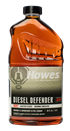
If you don’t already run a summer diesel additive to add lubricity, boost power and MPG, and remove water, it is recommended to start running one in the fall to clean your fuel system and engine before winter. Diesel fuel additives like Howes Diesel Defender guarantee a minimum of a 5% improvement in fuel economy and add vital lubricity to your fuel. Diesel Defender also safely removes water to reduce any potential icing issues in your fuel lines when winter hits.
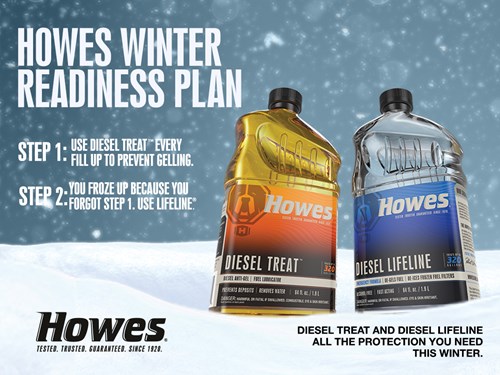
Then, before winter hits, start regularly treating your fuel with an anti-gel additive like Howes Diesel Treat. Using Diesel Treat at every fill-up before the cold hits ensures that your entire fuel system is treated and ready to go to prevent gelling on cold days. Using an anti-gel diesel additive from a trusted brand like Howes is one of the most effective ways to protect your engine in cold weather. Howes stands behind its product with a winter guarantee: if you properly treat your fuel and still experience gelling, they'll cover the cost of your tow. Their formula is safe for use in all diesel engines and contains no harmful alcohols or solvents, making it a smart, engine-friendly choice when temperatures drop.
Lastly, carry an emergency treatment like Diesel Lifeline and spare fuel filters. Keeping an emergency diesel de-gelling additive in your vehicle, plus tools and a spare fuel filter, ensures that if gelling does catch you off-guard you can address it on the spot and get moving again.
By implementing the prevention strategies outlined above, from using the right fuel and additives to maintaining your fuel system, you can largely avoid the nightmare of diesel gelling. The cost and effort to winterize fuel is minor compared to the cost of a tow, lost productivity, or repairs from a gelled-up engine. With proper care, your diesel engines will remain reliable workhorses even on those cold winter days.